Anwar Ibrahim
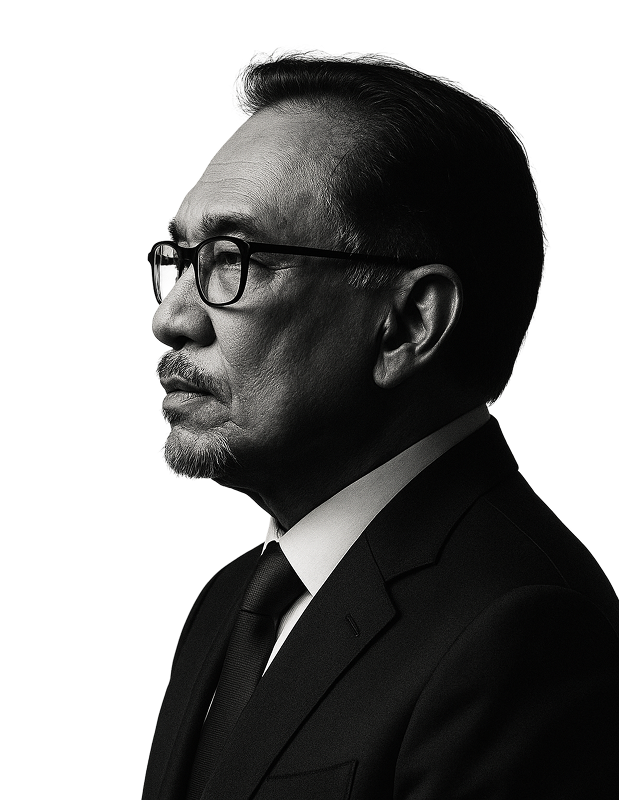
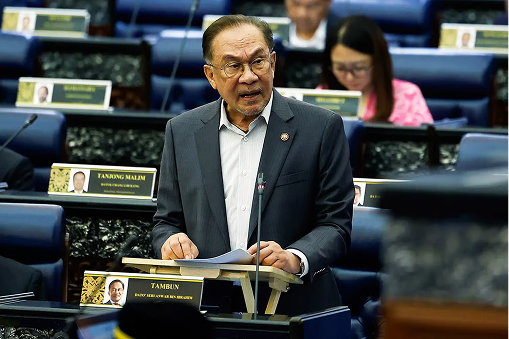
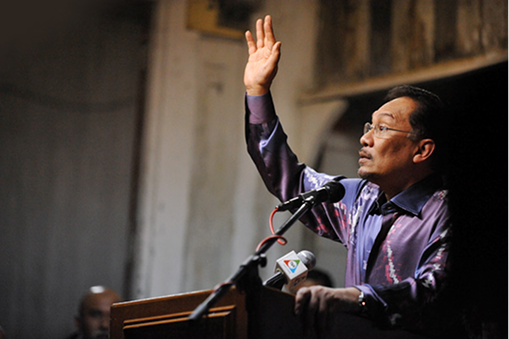
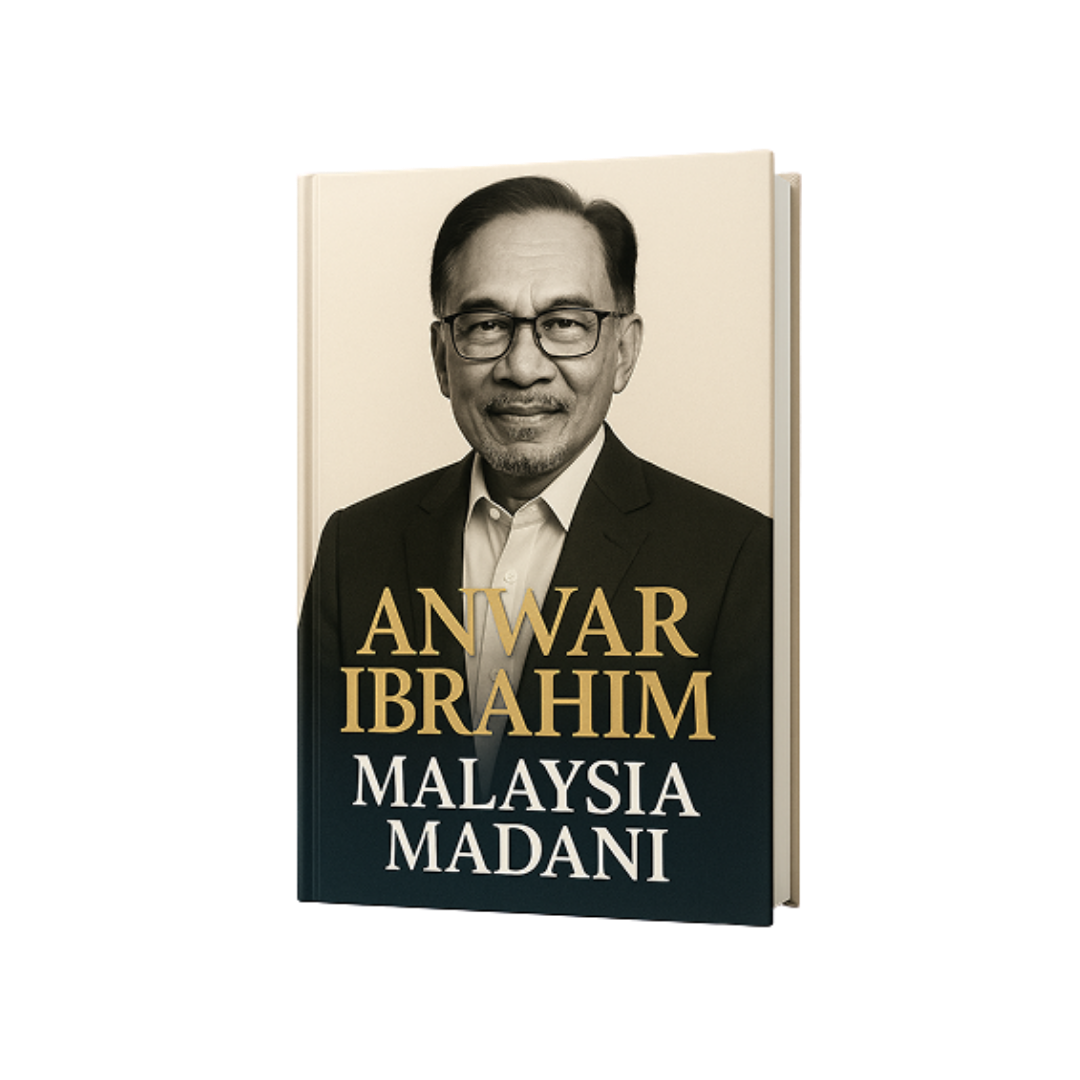
Anwar bin Ibrahim is the 10th Prime Minister of Malaysia and has also served as the Minister of Finance since 2022. Prior to this, he was a prominent Malaysian politician who served as the 12th and 16th Leader of the Opposition from 2008 to 2015, and again from 2020 to 2022. He has been the Chairman of Pakatan Harapan (PH) since 2020 and the President of Parti Keadilan Rakyat (PKR) since 2018
He served as the Member of Parliament for Port Dickson from October 2018 to November 2022, and for Permatang Pauh from March 1982 to April 1999, and again from August 2008 to March 2015. He also previously served as Deputy Prime Minister of Malaysia and held several cabinet positions under the Barisan Nasional (BN) administration led by former Prime Minister Mahathir Mohamad from 1982 to 1998.
Anwar began his political journey as one of the founders of the Angkatan Belia Islam Malaysia (ABIM). After joining the United Malays National Organisation (UMNO), the main party in the long-ruling BN coalition, he held various cabinet positions throughout the 1980s and 1990s, including serving as Deputy Prime Minister and Minister of Finance.
He was appointed as the Prime Minister of Malaysia on 24 November 2022 after securing majority support in the Dewan Rakyat and was officially sworn in before the Yang di-Pertuan Agong, Al-Sultan Abdullah.
Latar Belakang
Anwar Ibrahim was born on 10 August 1947 in Cherok Tok Kun, Bukit Mertajam, Pulau Pinang, in what was then the Crown Colony of Penang under the Malayan Union. He has also stated, during the 2023 state elections, that he was born in Sungai Bakap, Seberang Perai Selatan.
His father, Datuk Haji Ibrahim Abdul Rahman, began his career as a hospital porter before entering politics as a member of UMNO. He was later elected as the Member of Parliament for Seberang Tengah in 1959 and 1964, and served as Parliamentary Secretary at the Ministry of Health from 1964 until 1969. His mother, Che Yan Abdul Hamid Hussein, was a homemaker who was actively involved in grassroots politics in Penang and served as the head of UMNO Women for the Bukit Mertajam division. She was also known as a public speaker, and during his childhood, Anwar was often brought along to women’s speaking engagements, an experience that exposed him early to public discourse.
On 26 February 1980, he married Datin Seri Dr Wan Azizah Datuk Ismail, who was then a student at the Royal College of Surgeons in Dublin, Ireland, and later served at the eye clinic of University Hospital in Petaling Jaya. The couple has six children. Their eldest daughter, Nurul Izzah Anwar, has served as Member of Parliament for Lembah Pantai, Kuala Lumpur, and Permatang Pauh.
Edukasi
Anwar received his early education at several primary schools, including Sekolah Melayu Sungai Bakap, Sekolah Melayu Cherok Tok Kun, and Stowell Primary School in Bukit Mertajam. He then continued his secondary education at Bukit Mertajam High School, where he performed well academically, before being selected to further his studies at the prestigious Malay College Kuala Kangsar (MCKK). He was among a small number of students from Penang chosen to attend the institution.
During his time at MCKK, Anwar was actively involved in co-curricular activities. He participated in inter-school debate competitions, contributed to the Malay Language Association, and represented the school in public speaking.
He also engaged with organisations such as the St John Ambulance youth cadet unit and served as Secretary of the Badan Revolusi Agama Association. During this period, he formed connections with several individuals who would later become prominent figures in Malaysian politics. He later pursued higher education at the University of Malaya, where he obtained a Bachelor of Arts in Malay Studies.
Tahun-Tahun Pembentukan dan Aktivisme Belia
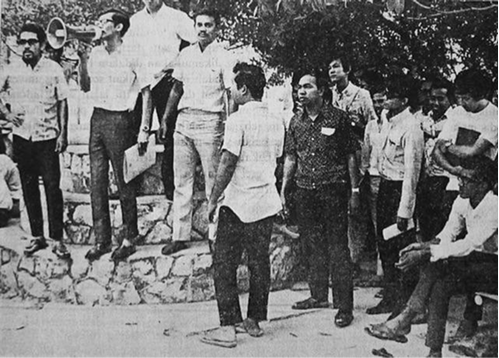
Between 1968 and 1971, during his time as a student, Anwar Ibrahim was actively involved in student leadership. He served as President of the National Union of Malaysian Muslim Students as well as President of the University of Malaya Malay Language Society (PBMUM). In 1971, he also played a role in movements aligned with the formation of the Angkatan Belia Islam Malaysia (ABIM), which he later helped establish. Around the same period, he was elected as the second President of the Malaysian Youth Council (MBM).
In 1974, Anwar was arrested following student-led protests highlighting rural poverty and hunger, particularly in Baling, Kedah, where rubber tappers were facing severe economic hardship due to falling rubber prices. He was detained under the Internal Security Act (ISA), which allowed for detention without trial, and spent approximately 20 months at the Kamunting Detention Centre.
Despite this, his involvement in youth and Islamic movements continued. From 1975 to 1982, he served as a representative for the Asia-Pacific region in the World Assembly of Muslim Youth under the leadership of Sheikh Hassan Abdullah.
From a young age, Anwar was widely recognised for his leadership and activism. He was among the key figures behind the establishment of influential non-governmental organisations such as the National Union of Malaysian Muslim Students and Angkatan Belia Islam Malaysia (ABIM). His detention between 1974 and 1976 further reflected his commitment to advocating for social justice, particularly in addressing issues of rural poverty.
Kerjaya Politik
In 1982, Anwar Ibrahim, who was then a founder leader and the second president of Angkatan Belia Islam Malaysia (ABIM), made a surprising move by joining the United Malays National Organisation (UMNO), led by Prime Minister Mahathir Mohamad. He formally left ABIM on 29 March 1982, at a time when the organisation had around 40,000 members.
Following his entry into UMNO, Anwar's political rise was notably swift. He was first appointed as Minister of Culture, Youth and Sports in 1983, before taking on the role of Minister of Agriculture in 1984. In 1986, he became Minister of Education. During this period, there was growing speculation about his potential to become Deputy Prime Minister, as the position had often been associated with those who previously held the education portfolio.
As Minister of Education, Anwar introduced several policies aimed at strengthening the national education framework, including changes related to the use and positioning of the Malay language. He was also elected President of the 25th UNESCO General Conference and later became the second President of the International Islamic University Malaysia in 1988.
In 1991, he was appointed Minister of Finance. During his tenure, Malaysia experienced strong economic growth and prosperity. His leadership gained international recognition, with financial publications such as Euromoney and Asiamoney ranking him among the world's top finance ministers. Amid the 1997 Asian financial crisis, Anwar was acknowledged for his role in guiding Malaysia through a challenging economic period. He advocated for market-driven policies, transparency, and accountability, while implementing fiscal discipline measures, including government spending cuts.
Anwar became Deputy Prime Minister in 1993 after winning the UMNO Deputy Presidency, defeating Tun Ghafar Baba. He was widely regarded as Mahathir's successor and was often described as having a close political relationship with him. In early 1997, he was appointed Acting Prime Minister while Mahathir took a two-month leave.
In addition to his national roles, Anwar also served as Chairman of the Development Committee of the World Bank and the International Monetary Fund from March to September 1998.